Thursday, 24 February 2011

Bhangra!

Welcome to Bhangra Performing Arts Students!

This term we will be exploring all different types of Bhangra dance and its influences in the Western World.  You will be expected to research both traditional and modern approaches to the variety of dance styles and produce some fabulous practical work.


We will have the opportunity to wear some of the costume and find out just how lively and vibrant the culture and style really is. 

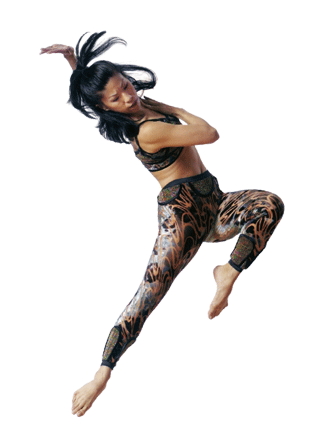
To get you started, here is one of my favourite dancers ...


Hrithik Roshan

(All the following has been taken from http://www.hrithikrules.com/).

Born on January 10, 1974 to then film star Rakesh Roshan (now producer/director) and wife Pinky, Hrithik (aka Duggu) grew up in the world of cinema, not truly understanding the hardships that one must endure to achieve success in the industry.


As a child, Hrithik's idol was none other than Papa Roshan, and he knew even then that one-day, he'd follow in dad's footsteps and pursue a career in acting as well. Being the grandchild of Producer J. Om Prakash, Duggu debuted in films as a child when he played a role in his Nana-ji's movie Bhagwan Dada. Later, he also danced for a song sequence in his grandfather's Aasha (starring Jeetendra).
Hrithik attended Sydneham College (with longtime friend Uday Chopra) and earned his Bachelor's Degree in B'Comm. While Mama and Papa Roshan wanted Hrithik to continue his post-graduate education abroad, Duggu had other plans in mind. 

Determined to prove himself as an actor, Duggu enrolled himself in Kishor Namit Kapoor's acting classes without informing his parents until months later. He wanted to reach his potential before showcasing his talent to his family, and then the world. Wanting to learn everything about cinematography and acting, he worked with his father during the production of Koyla and Karan-Arjun. Later, he even helped his father during the scripting stages of Kaho NaaPyaar Hai, not knowing that his papa had chosen him for the lead role.

When Rakesh Roshan told his son that he'd be doing the film, after the initial shock of the news subsided, Duggu asked his father for six months to prepare for the role. Hrithik got his wish, Rakesh-ji got a superstar actor, and in January of 2000, the world got a brand new idol.
After the release of Kaho NaaPyaar Hai, Hrithik's name instantly got penciled in on the top directors' list of "actors to sign for upcoming film". The big shots of the film industry began to approach him with scripts left and right. Hrithik became and instant success and while the world around him put him on a plateau, this boy-next-door was trying to figure out what all the hype was about. Even at the prime of his success, Duggu kept his feet firmly glued to the ground.


Hrithik's family and friends, including then longtime girlfriend Sussanne Khan, were extremely proud of this shy boy that they watched turn into an amazing actor. Never had they dreamed that his first performance would earn Hrithik a Filmfare not only for best newcomer, but best actor as well.

It wasn't until after the success of KNPH, once he was financially stable, that Duggu decided to marry his one true love. On December 20th, 2000, Hrithik managed to get a few days off from the camera in order to wed Sussanne at her father's Golden Palm's Resort and Spa in Bangalore. Many hearts around the world were broken that day, but marriage only seemed to help increase Hrithik's appeal. 


As a newcomer, he signed films with all the big banners, and although not all of his films were successful, Hrithik has grown as an actor in each one. After KNPH, critics raved about his performance in both Fiza and Mission Kashmir. With each of his first films, the audience's demand for excellence increased, and with that, Hrithik's need to meet the expectations of his fans. Unfortunately, a few of Hrithik's next films flopped due to poor story line and bad scripting. Even so, Duggu gave 200% to every role he did, and all of his performances, regardless of the movie's overall success at the box office, were liked among critics and fans alike. These flops only gave Hrithik a reason to work harder, to prove himself again.


He did so with Koi Mil Gaya - his second project with Papa Roshan. In a time when the media wrote him off, the father-son duo went beyond all borders of Hindi cinema with Bollywood's first Sci-Fi film. Hrithik's performance as the mentally challenged Rohit got him accolades not only from critics and fans, but also from the film fraternity. As Papa Roshan said at the 2004 Filmfare awards, the same critics that wrote him off were now giving him an award.

With his most recent film Lakshya, Duggu has only continued to excel at his talent. Though Farhan Akhtar's second film didn't bring in the box office collections that his directorial debut did, Hrithik's performance had the critics talking once again.

In 2006, the world watched and waited as Hrithik prepared to deliver the sequel to 2003 success Koi Mil Gaya, Krrish and also a sequel to 2004's blockbuster Dhoom, Dhoom 2. And prove himself he did, as the hardworking actor continues to do time and again. Rising higher and higher like a phoenix with every character he gives life to. Surpassing expectations every time. With Krrish the father and son team again crossed boundaries to go where no Hindi film has gone before, giving India its first celluloid superhero. Children and adults alike immediately fell in love with the caped, masked hero performed with panache by Hrithik, arguably the only actor in the entire industry who could carry off such a role on his mighty shoulders so very convincingly. Hrithik also reiterated his talent for double roles by playing the characters of both the young Krrish and his aging father Rohit with remarkable ease. The movie went on to become one of the year's biggest blockbusters.
And if he rescued the world from miscreants in Krrish, in Dhoom 2 he proved his versatility by playing the silver screen's most dashing and enthralling thief. As Mr A, Hrithik oozed confidence and style, thrilling women and men, young and old alike with his stylishly planned heists, mesmerising charisma and a body sculpted to sexy perfection! The entire movie-watching world buzzed with the unanimous opinion - that Dhoom 2 was fantastic because Hrithik Roshan was fantastic. Hrithik's effect on movie goers was like a intoxicating drug, making us go back again and again to enjoy the rush one more time! In spite of a late release in the year, Dhoom 2 too became the year's biggest hit. With Krrish and Dhoom 2 smashing box office records all over, Hrithik once again earned himself critical and popular acclaim and awards from all corners of the globe. Today he has re-affirmed his place as one of the highest earning actors in the industry. He is without doubt one of the most deserving.
From one drastically different role to another, Hrithik's latest project will see him in the role of an emperor when a piece of history is brought to life in Ashutosh Gowariker's period drama Jodha Akbar. We await the film in complete confidence that Hrithik will give as much authenticity to his first historical character as he has to so many roles in his short career.

Visit some of his most famous performances on YouTube. 

Saturday, 27 November 2010

On the 10th of December our year 10 performing arts class are putting on a show and everyone is welcome!
There's no need to worry about the cost of tickets as they're completely free. There will be a range of refreshments for you as well.  Our class of just twelve members will be performing a variety of dances that we have been working on in school time with Miss Dolan.

However, its not just practical that we have been working on over the past couple of months, we have also been very busy at work with our costume construction classes with Miss Hearne. There will be a gallery set up of all of our work that we have been doing with her.
I hope that you have time to read this and think about coming to watch us show off our skills that we have learnt in these past 3 months!

(written by Ellie Goodchild)

Saturday, 30 October 2010

Matthew Bournes 'Cinderella'

Sadlers Wells from 30th November 2010


'Cinderella' Matthew Bourne - 
CLICK on shoe
for a video clip!


"Set in London during the Second World War, Matthew Bourne's interpretation of Prokofiev's haunting score has, at its heart, a true wartime romance and his storytelling has never been more passionate and touching. A chance meeting results in a magical night for Cinderella and her dashing young RAF pilot, together just long enough to fall in love before being parted by the Blitz." (source Sadlers Wells website).


Matthew Bourne
Matthew Bourne is one of the most famous and successful UK choreographers of today, and boasts a variety of amazing performance pieces and awards under his belt.  Matthew started training to be a dancer at the comparatively late age of 22.  He studied Dance Theatre and Choreography at The Laban Centre graduating in 1985 but spending a further year with the college’s performance company Transitions.  Matthew danced professionally for 14 years creating many roles in his own work.  In 1999 he gave his final performance playing The Private Secretary in the Broadway production of Swan Lake.

Matthew Bourne is a Resident Artist at Sadlers Wells Theatre. His company, New Adventures, has enjoyed a special relationship with the theatre and its audiences for many years and was invited to be Resident Company in 2006.

Sunday, 17 October 2010

A lesson in developing the choreographic process!

"It's the heart afraid of breaking that never learns to dance. It is the dream afraid of waking that never takes the chance. It is the one who won't be taken who cannot seem to give. And the soul afraid of dying that never learns to live.” (Bette Midler)

This week in BTEC performing arts and GCSE dance, students will be expected to start to question their choreographic process.  Irrelevant of what you are working on  in dance, it is always so important to understand how to use stimulus and develop ideas through the use of MOTIF and tracking the strengths and weaknesses of your piece.  Sometimes, having the courage to reject something 'pretty' in your choreography to help progress to that next level can really start to set you apart from your peers. 

Holding onto that dramatic stag leap into an ariel barrel roll just because your audience will gasp with wonder at you won't do any favours to the greater good of the dance if it doesn't fit with your theme or stimulus!

Choreographic Process broken down:

Below is a past students written plan for her choreography.  Although this piece of written work was used for assessment purposes, I don't see why we can't still use this process to help ground our choreography as an exercise in good practice?  It obviously did something for her as she scored top band for her choreographic process and outcome (final performance).


Title of Dance: The shape of life
Title of Music/Composer: HIDE AND SEEK-IMOGEN HEAP
Stimulus: DYNAMICS-OVER, UNDER, AROUND

Theme of Dance/brief statement:
A solo dance to show the determination and games you play to reach your goal.

My initial idea for this piece was that I wanted my dance to show my dancer reaching for a goal in their life. So it would have to have movements showing a struggle.

I wanted to use all the space provided and different directions and phrasings to show diversity. I also knew I wanted it to have a modern and contemporary style to it, as that it what I imagine when I listen to the music.

Section 1- Dancer on the floor, her head down. Music starts she does a contraction up and down then looks up to start her journey. As the section ends the dancer runs around to find her way.

Section 2- The dancer starts to fight for her goal but is knocked down by others. She gets up and shows her frustration through dance.

Section 3- She starts to play the games, going slow put with power, making sure she is noticed and it looks as if she will get her goal or will she?


My dance is a solo, and the dancer’s aim is to reach her goal. She starts off thinking her goal will be easy to reach but then find she has to play games and need a lot of determination to succeed. I start the dance with her on the floor to show that she is starting from nothing, with fluid movement. This suddenly changes when she gets up with movements that are sharp. The size of the movements also follow the same pattern that, as the movements get sharper so does the size of the movements.

As the dance progresses the space diameter used is changed constantly. I worked on different lines and levels with the arms, legs and body to show barriers she comes up against. I have done this to represent the dancer at a variety of stages towards her goal.

Changes made- Once the dance had been choreographed there were only a few changes made in the relation of movement or dynamics. My original beginning movements of my dance were very jerky and syncopated, but then once looking at it I decided that my first section was all one dynamic and there was no light and shade to the movement. I also changed my ending to the dance. Instead of leaving my dancer reaching out for her goal with an arm on the floor I had her standing up with her feet in jazz fourth and arms in jazz second, but I felt it was left unfinished and didn’t fit into the piece.

Staging- I mainly kept to original plan of how I used the space. I knew I wanted to start in the centre but use as much space as possible to show the long journey. I changed the odd direction of movements that the dancer would deliver for the atheistic reasons for the audience. But considering this, the majority of the dance mapped out as I planned.

Direction and improvement-
I blocked the dance into three contrasting sections and worked out the motivation of the dancer. From the outset I wanted to show a story through my dance, as I feel when dancing an emotion is always needed to show you the difference between a good dancer and a great dancer.

Use of music-
The song “Hide and Seek” is entirely vocal, so it let me play around with pace and where the movement syncopation would be. Even though it does keep a constant time signature throughout (4/4) but the pace of the voice changed in certain parts.  At the beginning of the song it has a breath I incorporated this as if it was the dancer breathing getting ready for what is about to come.

In the title/chorus line “Hide and Seek” the phrase is prolonged I wanted to emphasises this part of the dance like no other section, so I used a repetition of an arm movement. When choreographed I took many words from the song and linked to the movement.

Rejected material-
I rejected some little movements in my middle section, as I felt it made the phrase of movements lose the flow and momentum. There was a part where the dancer was lying on her back with her knees held to her chest then would rock forward and stand up then fall to the floor again. But when I rehearsed it, it stood out as a movement not needed and just awkward to look at. I ended up still lying on the floor but with my knees parallel on the floor and rolling up through my spine.

Sunday, 3 October 2010

Time to create!

This week DV8 wannabes we will start to look at how we develop and choreograph in the style of DV8!  This will be broken down into the following stages:

Section 1:

Get The Box’ Sinking & Rising Duet
[Never lose contact]

  1. Partners push against each other – no hands

  2. Hang around the shoulders

  3. Sink to the floor    

  4. Grab & pull leg

  5. Racing start

  6. Lift onto the back

  7. Go over/under swapping places

  8. Crawl to object in slow motion

  9. Roll over each other

  10. Raise object without using hands

Section 2:
‘You Can’t Have It’ Teasing/Bullying Trio
1. Tap on shoulder causing change of direction with development
2. Travelling/stepping gallop, chasée, pas de bourée, run, walk, hop, jump, skip, leap, turn, tip-toe, roll
3. Repeat tap & travel (1 & 2) twice more with different partners
4. Signal drop, fall/catch & lift over to side
5. Over/under, around, through ducking & diving x3
6. Run around partner chasing object 
7. Throwing object x 4
8. Pushing through the blocking group to get to the parcel
9. Passing the box along a long line
10. Make a bar and swing/rebound off it

Monday, 27 September 2010

DV8 'Dance that means something'

Lloyd Newson was born in Australia and has worked with the DV8 dance company since 1996.  His radical and innovative ideas are often hard hitting and really do mean something in the emotion it evokes in the audience.  Straddling dance, text, theatre and film, Newson work’s refuses to be defined. He is interested in conceiving original work rather than performing existing plays or reinterpreting classical ballets.


Enter Achilles:

What a relief it is to be shown a piece of dance where the audience doesn't spend the first ten minutes thinking: 'what the hell is going on?' Instead, DV8's 'Enter Achilles' is drawn from everyday life with instantly recognizable references. Now cut to a 'marmalade' of eight 'straight' men, confined within the four walls of a typical pub; pint in hand, football on screen, the jingle of a fruit machine underneath a cacophony of karaoke and screeching wolf whistles to the blondes outside. Choreographer Lloyd Newson creates an extremely clear interpretation of the typical British 'norms' and its stereotypical views towards the male sex, male behaviour and above all, male relationships. He asks you to consider: 'why is it acceptable for men to do footwork around a football but not to do footwork in dance? 

Friday, 10 September 2010

How do I?

Construct a Portfolio?


Your Performing Arts portfolio is what will help you either gain a:

• Pass
• Merit
• Distinction

So it needs to be used and added to throughout the course. There are three things you need to remember as you go through this course and they are:


Task
Evidence
Portfolio


If you remember TEP you can’t go wrong! There are four steps to ensure you are doing the right things and we are going to look at them in more detail now …

Remember, don’t panic! Once you get your head around the way you record your evidence for Performing Arts you will be flying!

Step one: PORTFOLIO

Miss Dolan will be starting the course with:      Unit C14 Dance Development

Assignment 1 (DV8 Dance Style)
Task 1, Task 2, Task 3, Task 4


Assignment 3 (Research Project)
Task 1, Task 2

Miss Hearne will be starting the course with:  Unit D15 Costume Construction

Assignment 1 (Fabric construction)

Task 1, Task 2, Task 3

Step 2:  ONLINE BLOG (which you are already doing)

Step Three: PRACTICAL PORTFOLIO


Throughout your course you will be undertaking a lot of practical work in all three units. For this reason we have purchased for you an A2 art portfolio that you can keep together ALL your mood boards and costume designs. You can also keep flat posters for productions and anything else that may not fit neatly in your A4 lever arch file!

This A2 folder can be kept in school and will form part of your final assessment portfolio.


STEP 4: CROSS REFERENCING!

It is important to remember that your A4 lever arch folder is your main portfolio and the BLOG and the A2 PRACTICAL folder will compliment your work and act as the EVIDENCE. Therefore you have to make sure you can cross reference your folder to show your examiners where to find things you say you have done to pass!

For example, if you are working on assignment 1, task 2 of Costume Construction and in your portfolio you say:
  1. ‘I have produced a mood board showing different types of fabric’,
  2. You then need to make sure that in your portfolio it says ‘SEE practical folder for evidence’
  3. And then label your mood board in your practical folder as ‘evidence for assignment 1, task 2 D15’